
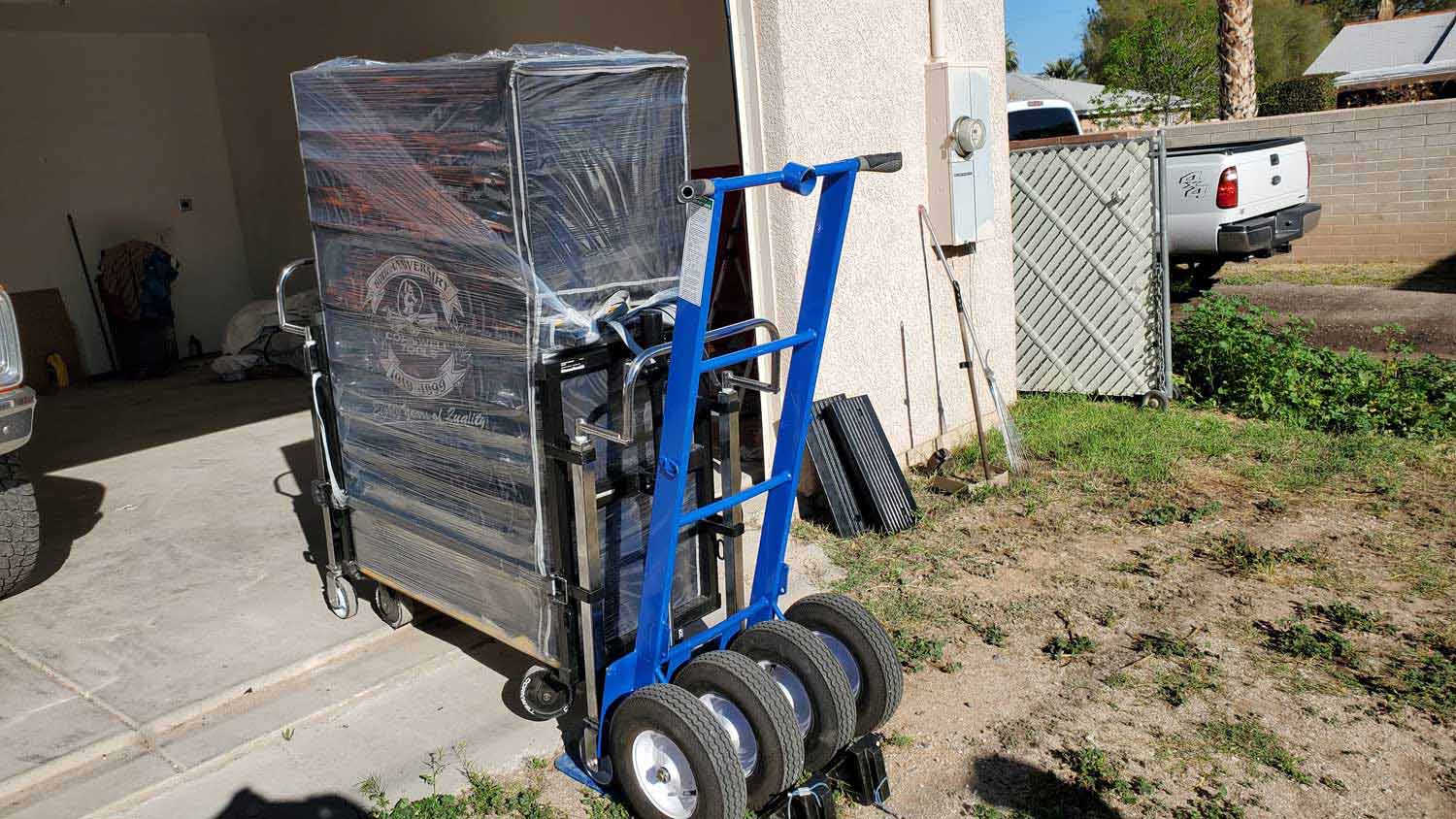
Moving heavy objects is one of the most physically demanding and potentially dangerous parts of any relocation. Furniture, appliances, safes, exercise equipment, and oversized household items can cause serious injuries or property damage when they are moved without the right preparation, equipment, or technique.
Successful heavy-item moving is not based on strength alone. It requires planning, communication, proper body mechanics, and a realistic understanding of the item, the route, and the people involved.
This guide explains how to move heavy objects more safely and efficiently while reducing the risk of injury, damage, and unnecessary delays.
Before lifting or moving anything, inspect the object and the surrounding environment.
Determine:
Do not assume an object is manageable based on its appearance. Items such as sleeper sofas, solid-wood dressers, gun safes, refrigerators, and commercial equipment may weigh much more than expected.
If the item cannot be safely controlled throughout the entire route, the plan should be revised before the move begins.
Many heavy-item problems occur because the object fits in the room but not through the doorway, hallway, stairwell, or exterior entrance.
Measure the object’s:
Then measure:
Remember that the object may need additional clearance to rotate around corners.
Remove doors from their hinges when necessary and safe to do so. In some cases, removing furniture legs, shelves, handles, drawers, or doors can reduce both weight and overall dimensions.
Plan the orientation of the item before lifting it. Decide whether it will travel upright, on its side, or at an angle.
The moving route should be completely clear before the item is lifted.
Remove:
Open doors and secure them so they do not swing closed during the move.
Inspect the floor for wet areas, uneven surfaces, thresholds, cracks, gravel, or other hazards. Make sure there is enough lighting throughout the route.
Moving a heavy item should be one continuous, controlled process whenever possible. Stopping unexpectedly because the path is blocked can increase the risk of injury or loss of control.
Professional movers rely on equipment because even experienced crews should not attempt to carry every heavy item by hand.
Common heavy-moving equipment includes:
The correct equipment depends on the item, its shape, the surface, and the route.
A four-wheel furniture dolly may be appropriate for a dresser or cabinet on a level surface. An appliance dolly with securing straps may be better for a refrigerator or washing machine. Furniture sliders can help reposition items across hard flooring or carpet without lifting the full weight.
Do not use damaged, undersized, or improvised equipment. Confirm that dollies, straps, ramps, and tie-downs are rated to support the weight being moved.
Before moving a heavy object, remove anything that can be safely taken out or detached.
For furniture, remove:
For appliances, remove:
Reducing the weight makes the item easier to control and lowers the strain placed on the movers.
Removing components can also make the item narrower and easier to maneuver through tight spaces.
Label all hardware and place screws, bolts, brackets, and small parts into sealed bags. Attach each bag to the corresponding item or keep all hardware together in a clearly labeled container.
Heavy objects are difficult to stop or redirect once they begin moving. Protecting the item before transport helps prevent scratches, dents, broken components, and damage to surrounding surfaces.
Use moving blankets to cover:
Secure the blankets with stretch wrap or moving bands. Avoid placing tape directly on finished furniture, leather, painted surfaces, or delicate materials.
Make sure the protective materials do not interfere with handles, grip points, wheels, or lifting straps.
Glass, stone, mirrors, and fragile components may require separate packing or specialized crating.
The item is not the only thing at risk. Floors, walls, doorframes, railings, and ceilings can also be damaged.
Use:
Pay special attention to hardwood floors, tile, narrow doorways, stair rails, and freshly painted walls.
Never drag heavy furniture directly across a finished floor. Even short movements can cause scratches, gouges, broken tile, or damaged carpet seams.
Improper lifting is a common cause of back, shoulder, knee, and hand injuries.
When lifting a heavy object:
Do not bend at the waist and attempt to lift with your back.
Avoid sudden movements, jerking, or attempting to catch an object that is already falling. If control is lost, moving out of the way may be safer than trying to save the item.
Wear closed-toe shoes with good traction. Work gloves can improve grip and help protect hands, but they should fit properly and should not reduce dexterity.
Pushing an object or dolly often provides better control than pulling it, especially on level surfaces.
When pushing, you can generally:
However, pulling may be necessary in tight spaces or when positioning an object.
Regardless of the direction, move slowly and keep hands, feet, and clothing away from wheels, edges, pinch points, and doorframes.
Clear communication is essential when two or more people are moving the same item.
Assign one person to direct the move. That person should communicate commands such as:
Everyone should understand the plan and the terminology before lifting begins.
Avoid vague instructions or multiple people giving conflicting commands.
The person walking backward should receive clear guidance about steps, thresholds, walls, and other hazards. Move only when every team member confirms they are ready.
Stairs significantly increase the danger and complexity of moving heavy objects.
Before attempting a stair carry:
The person below the item generally carries more of the weight and may face greater risk if control is lost.
Keep the item balanced and move one step at a time. Do not rush. Use stair-climbing equipment or professional moving assistance when the item is exceptionally heavy, oversized, or difficult to grip.
Some objects should not be carried manually on stairs without specialized equipment.
Ramps can make loading and unloading easier, but they introduce slope-related risks.
Before using a ramp:
Use a spotter when moving large items on a ramp. Maintain control of the dolly and avoid standing directly downhill from an unsecured load.
Never allow an item to roll freely down a ramp.
When using an appliance dolly, hand truck, or other wheeled equipment, the item should be properly balanced and secured.
Position the load so its center of gravity remains stable. Use straps to prevent the object from shifting or separating from the equipment.
Test the balance before moving more than a few inches.
If the item begins to lean, shift, or slide, stop and reposition it. Do not attempt to correct an unstable load while moving quickly.
Keep hands away from the space between the item and the dolly frame.
Appliances require special preparation because they may contain water, electrical components, refrigerant, internal suspension systems, or fragile connections.
Before moving a refrigerator or freezer:
Consult the manufacturer’s instructions regarding how long the appliance should remain upright before being reconnected.
Before moving a washing machine:
Water left inside hoses or the machine can leak during transport.
Electric and gas dryers should be disconnected correctly. Gas appliances may require a qualified professional.
Secure the cord, vent hose, and any loose components before moving the dryer.
Furniture may be heavy, awkward, and difficult to grip.
Before moving furniture:
Use sliders to move furniture away from walls before attempting to lift it. Once there is enough space, position the dolly or straps properly.
Never lift a piece of furniture by its handles unless the handles are designed to support the entire weight.
Dressers, armoires, and cabinets may become unstable when tilted. Keep doors and drawers secured so they do not open during transport.
Safes are among the most dangerous household items to move because they combine extreme weight with a compact footprint.
Before moving a safe, determine:
Do not attempt to move a large safe using a standard household dolly.
Large safes may require powered stair-climbing equipment, hydraulic machinery, reinforced ramps, or specialized rigging.
When a safe is involved, hiring professionals is often the safest and most cost-effective option.
Pianos are heavy, fragile, and mechanically complex. Their shape also makes them difficult to balance.
Moving a piano may require:
Upright and grand pianos require different preparation and handling methods.
Improper movement can damage the legs, pedals, cabinet, internal components, flooring, and walls. It can also cause serious injury.
Professional piano moving is strongly recommended, particularly when stairs or tight turns are involved.
One of the most important safety decisions is recognizing when an item should not be moved without professional help.
Consider hiring movers when the object is:
Professional movers have training, equipment, experience, and established procedures for handling heavy items.
The cost of professional assistance may be significantly lower than the cost of an injury, damaged property, or destroyed equipment.
Heavy items should generally be loaded early and positioned to create a stable foundation inside the moving truck.
Whenever possible:
Do not leave tall or narrow items unsecured.
Appliances, safes, and heavy furniture should be tied down independently when appropriate. Confirm that straps are tight but not positioned in a way that could damage delicate surfaces.
The destination should be evaluated before unloading begins.
Confirm:
Do not unload a heavy item until you know exactly where it will go.
Repeatedly repositioning a safe, appliance, or oversized piece of furniture increases labor, risk, and the likelihood of damage.
Measure the final location and confirm access before moving day whenever possible.
Avoid these frequent mistakes:
Efficiency does not mean rushing. A controlled, well-planned move is usually faster than recovering from an accident or correcting preventable damage.
Moving heavy objects safely requires more than physical strength.
Accurate measurements, proper equipment, a clear route, effective communication, and correct lifting techniques all contribute to a safer and more efficient move. The most important step is knowing when the object exceeds the capabilities of the available people or equipment.
Moving Buddies Tucson AZ helps homeowners, renters, businesses, and property professionals move heavy furniture, appliances, safes, specialty items, and other difficult belongings.
Professional movers can assess the item, protect the property, select the right equipment, and transport the object with greater control from pickup to final placement.
Contact Moving Buddies Tucson AZ to discuss your heavy-item moving needs, access conditions, equipment requirements, and moving-day logistics.

A practical guide to managing the overlapping timelines of selling a home, purchasing another property, and completing the physical move.
A step-by-step guide to preparing a Tucson-area home for sale, from repairs and decluttering to photography, showings, and moving logistics.
A practical comparison of buying first and selling first, including financing, timing, negotiation, temporary housing, and moving considerations.



.svg)
