Office Moving Services in Tucson, AZ

Organized Business Relocation With Less Disruption

An office move involves more than transporting desks and boxes. Businesses must coordinate employees, equipment, records, building access, technology, furniture placement, and operational deadlines—often while continuing to serve customers.

Moving Buddies Tucson AZ provides professional office moving services for businesses relocating within Tucson and nearby Southern Arizona communities. We can help move office furniture, boxed documents, electronics, workstations, storage contents, and other business property between commercial spaces.

Whether you are moving a small professional office, reorganizing an existing workspace, or relocating multiple departments, careful planning helps reduce downtime and keep the process manageable.

What Office Moving Services Include

The exact scope depends on the size of the business, the inventory, the buildings involved, and the customer’s schedule.

Common office moving tasks may include:

  • Moving desks, chairs, tables, and filing cabinets
  • Transporting boxed files and office supplies
  • Disassembling and reassembling selected furniture
  • Moving modular workstations
  • Handling computers, monitors, and peripheral equipment
  • Moving printers and standard office machines
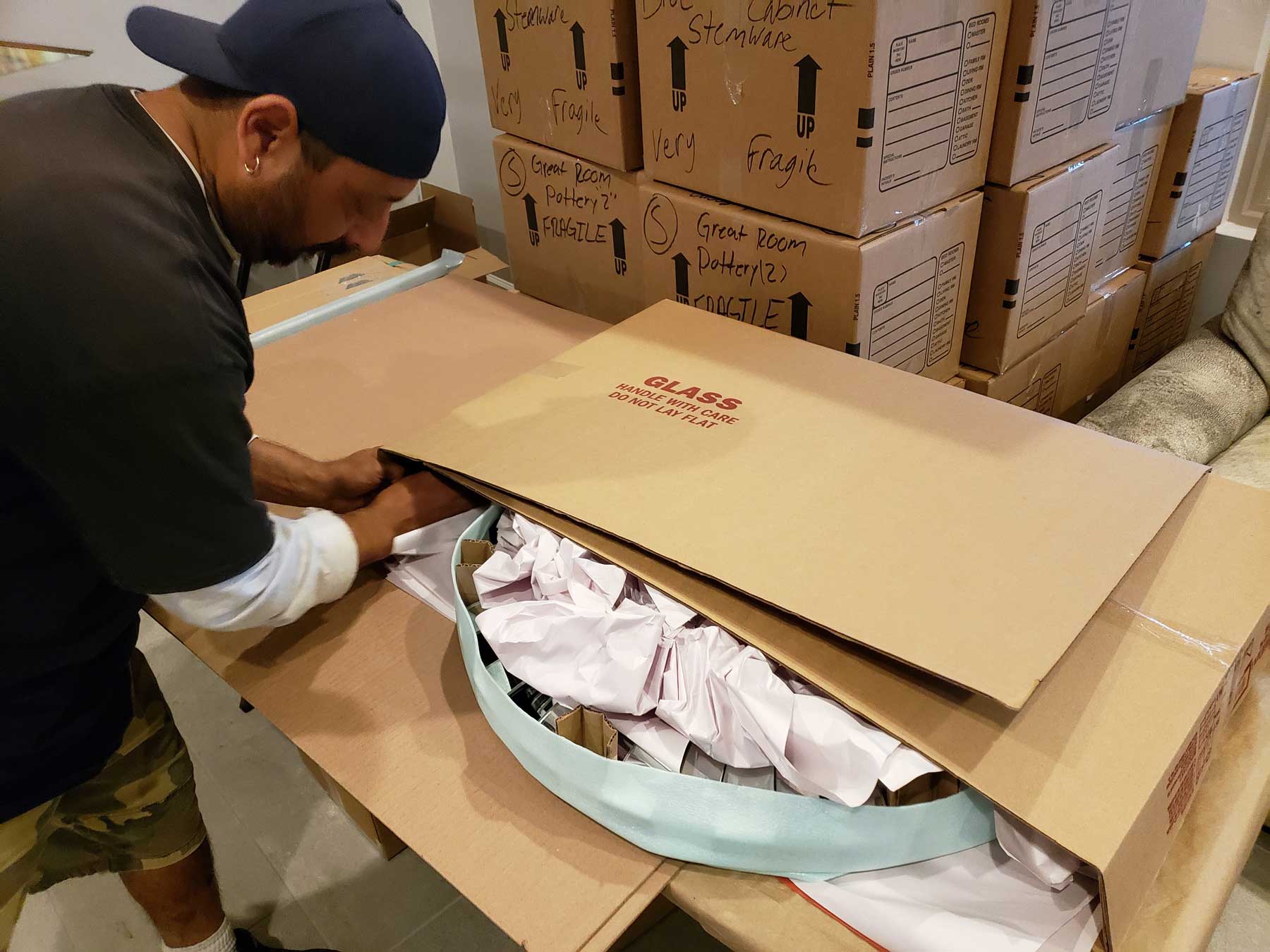
  • Packing or unpacking selected office contents
  • Labeling and organizing departments or work areas
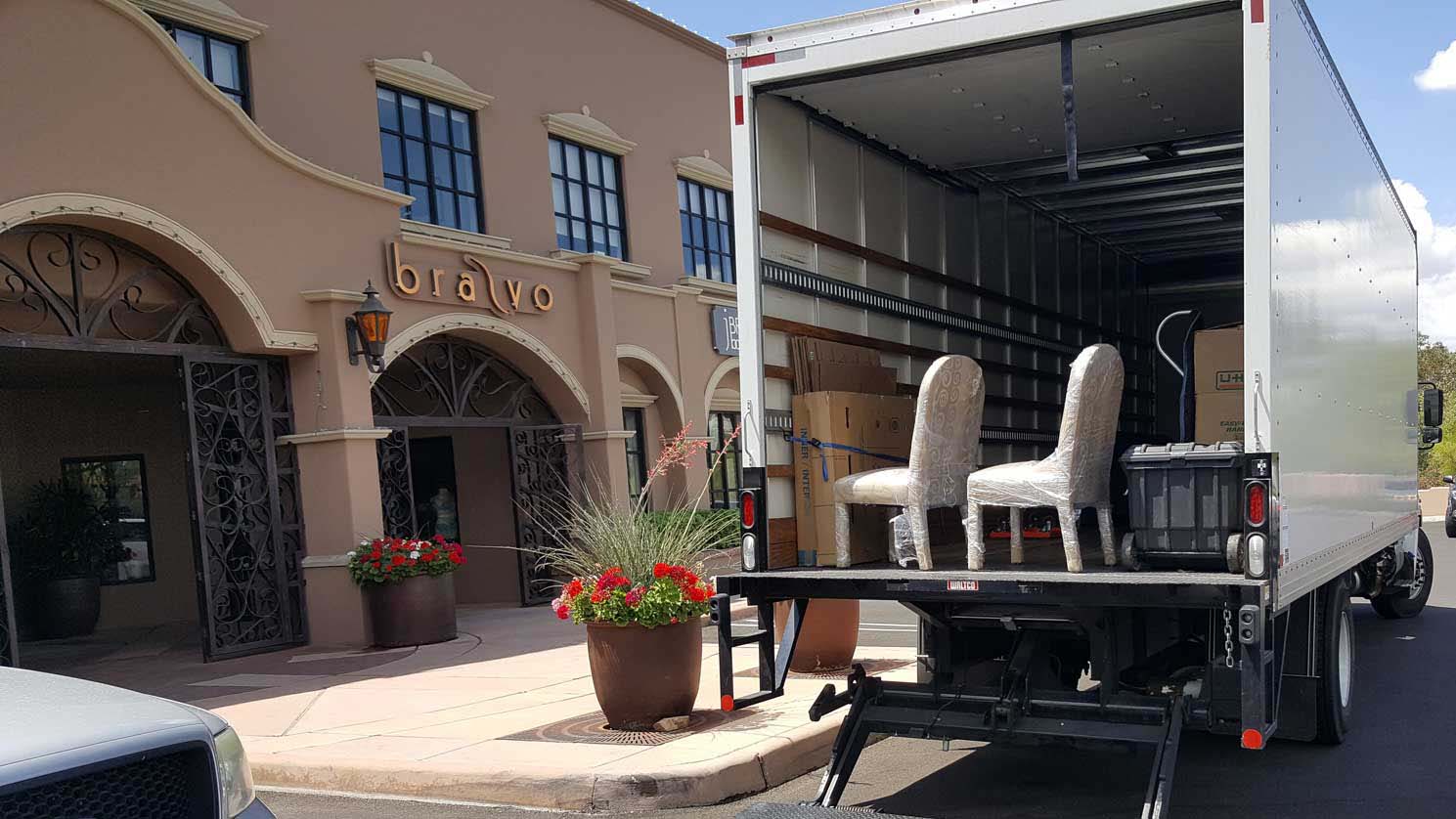
  • Loading and unloading moving trucks
  • Placing furniture according to a floor plan
  • Moving storage-room contents
  • Relocating conference-room furniture
  • Internal office rearrangement
  • Moving equipment into or out of commercial storage

Specialized technology, machinery, safes, server equipment, industrial equipment, and unusually heavy items may require additional planning or a specialty provider.

When Office Moving Service Is Helpful

Professional office movers can help with:

  • Relocating to a new commercial space
  • Moving to a larger or smaller office
  • Combining multiple offices
  • Closing a satellite location
  • Reorganizing departments
  • Moving employees between floors or suites
  • Setting up a newly leased office
  • Moving furniture into storage
  • Removing furniture from storage
  • Preparing for renovation
  • Rearranging an existing workspace
  • Moving a home office into a commercial location
  • Relocating a small retail or service-based business

The service can be adjusted for a complete relocation or a limited portion of the move.

Types of Offices We Can Help Move

Moving Buddies may assist with many common office environments, including:

  • Professional offices
  • Real estate offices
  • Insurance agencies
  • Accounting firms
  • Law offices
  • Medical administrative offices
  • Nonprofit organizations
  • Small corporate offices
  • Call centers
  • Educational offices
  • Retail back offices
  • Home-based businesses
  • Creative studios
  • Sales offices
  • Service-company offices

The building, equipment, access conditions, and inventory should be reviewed before scheduling.

How Moving Buddies Approaches Office Moving

Planning the Move

Office relocations are more efficient when responsibilities, timelines, and placement decisions are established before moving day.

Planning may include:

  • Reviewing the office inventory
  • Identifying departments or work zones
  • Confirming the moving date and building hours
  • Reviewing elevator and loading-dock access
  • Identifying furniture requiring disassembly
  • Separating items employees will move personally
  • Reviewing sensitive or restricted materials
  • Confirming technology-disconnection responsibilities
  • Creating a labeling system
  • Reviewing the destination floor plan
  • Identifying priority areas that must be operational first

A single company representative should be designated to coordinate decisions with the moving crew.

Organizing by Department or Work Area

Office contents should be grouped and labeled according to their destination.

A simple coding system might identify:

  • Department
  • Employee
  • Office number
  • Workstation number
  • Floor
  • Storage area
  • Conference room
  • Reception area

Consistent labeling helps prevent boxes and furniture from being delivered to the wrong area.

Protecting Office Furniture

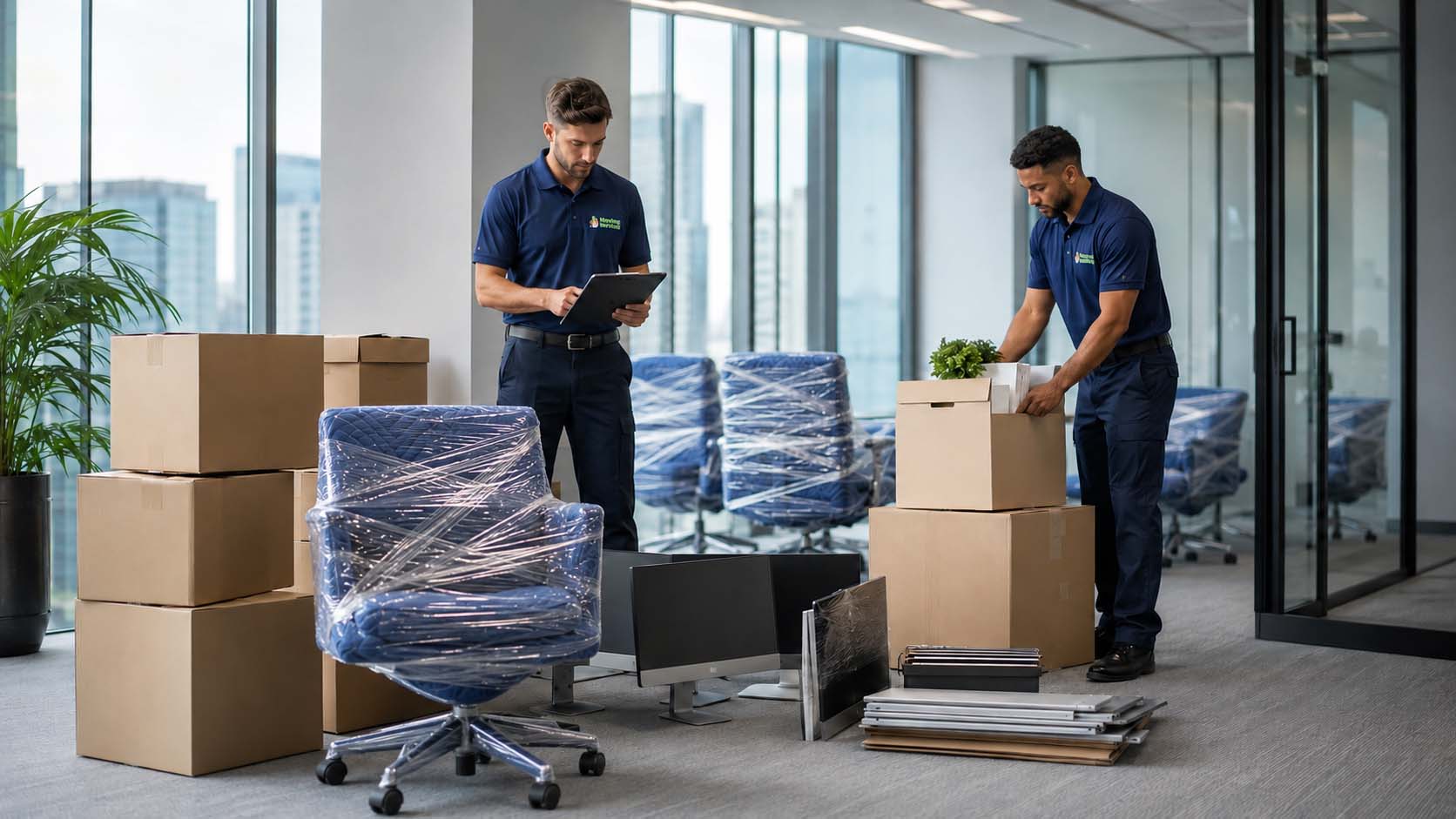
Desks, conference tables, shelving, chairs, cabinets, and other furniture may require protection during handling and transportation.

Protective materials may include:

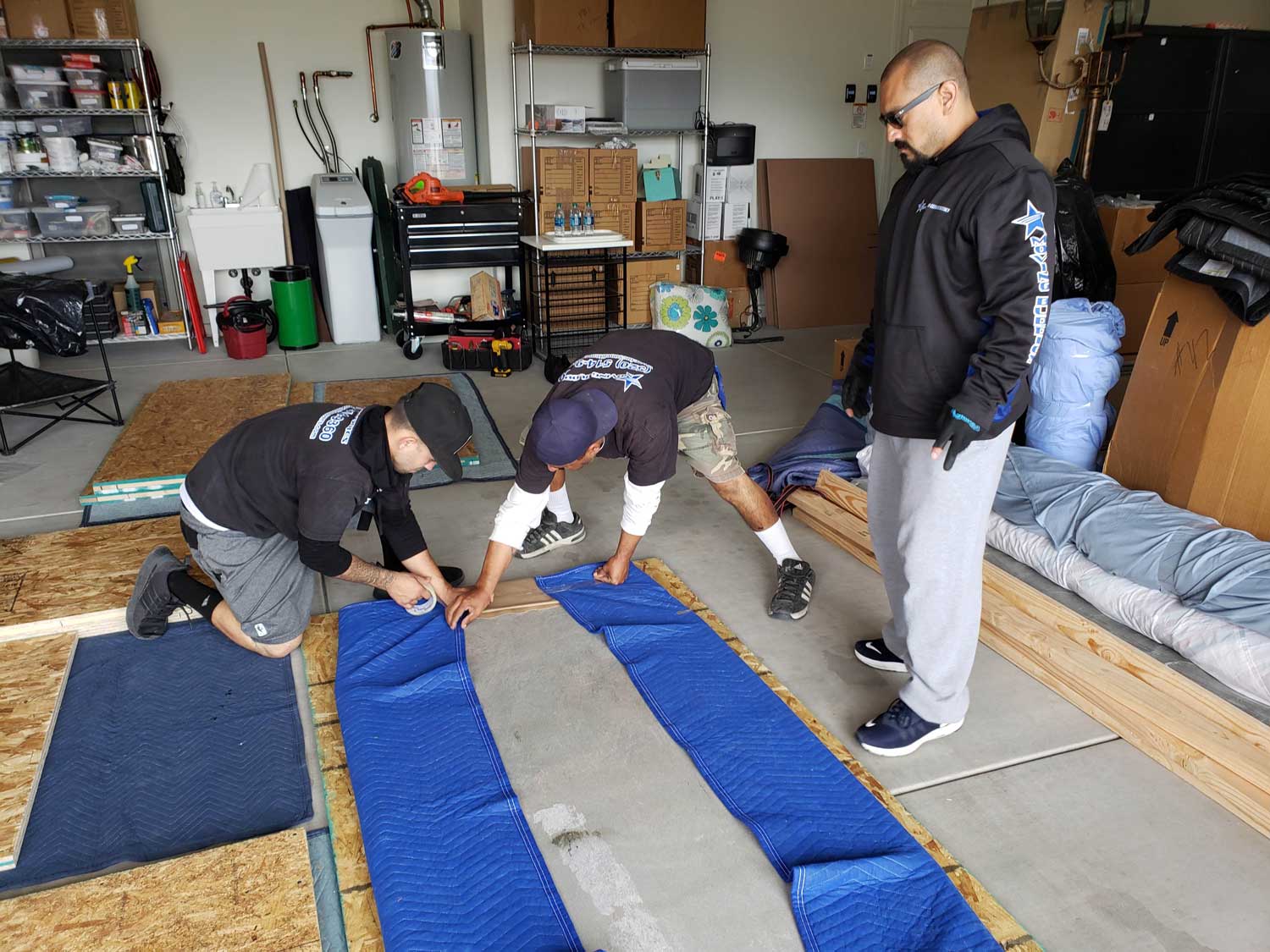
  • Moving blankets
  • Stretch wrap
  • Corner protection
  • Cardboard
  • Foam
  • Furniture covers
  • Tie-down straps
  • Protective floor materials

The protection method depends on the material, finish, shape, and condition of each item.

Disassembly and Reassembly

Some office furniture moves more safely when partially disassembled.

This may include:

  • Removing desk legs
  • Separating modular sections
  • Removing shelves
  • Detaching return sections
  • Removing table bases
  • Taking apart selected workstations
  • Removing removable glass or stone tops

Hardware should be placed in labeled bags and kept with the corresponding furniture whenever practical.

Complex systems furniture, cubicles, wall-mounted installations, and specialty furnishings may require installers familiar with the manufacturer’s system.

Reducing Business Downtime

A successful office move should support a faster return to normal operations.

Ways to reduce disruption include:

  • Packing nonessential items early
  • Moving during low-volume business periods
  • Completing technology backups before the move
  • Assigning employees clear responsibilities
  • Creating a destination floor plan
  • Prioritizing essential departments
  • Labeling every box and furniture item
  • Reserving elevators and loading areas
  • Confirming internet and utility activation
  • Keeping essential documents accessible
  • Scheduling vendors separately from the moving crew
  • Communicating the move timeline to employees and customers

Moving Buddies can help with the physical relocation, but technology, utilities, access credentials, and business continuity should be coordinated by the company.

Creating an Office Moving Plan

Establish the Timeline

Office moves often involve deadlines related to leases, contractors, technology installation, and business operations.

A basic timeline may include:

  • Confirming the new location
  • Scheduling the moving company
  • Reviewing building requirements
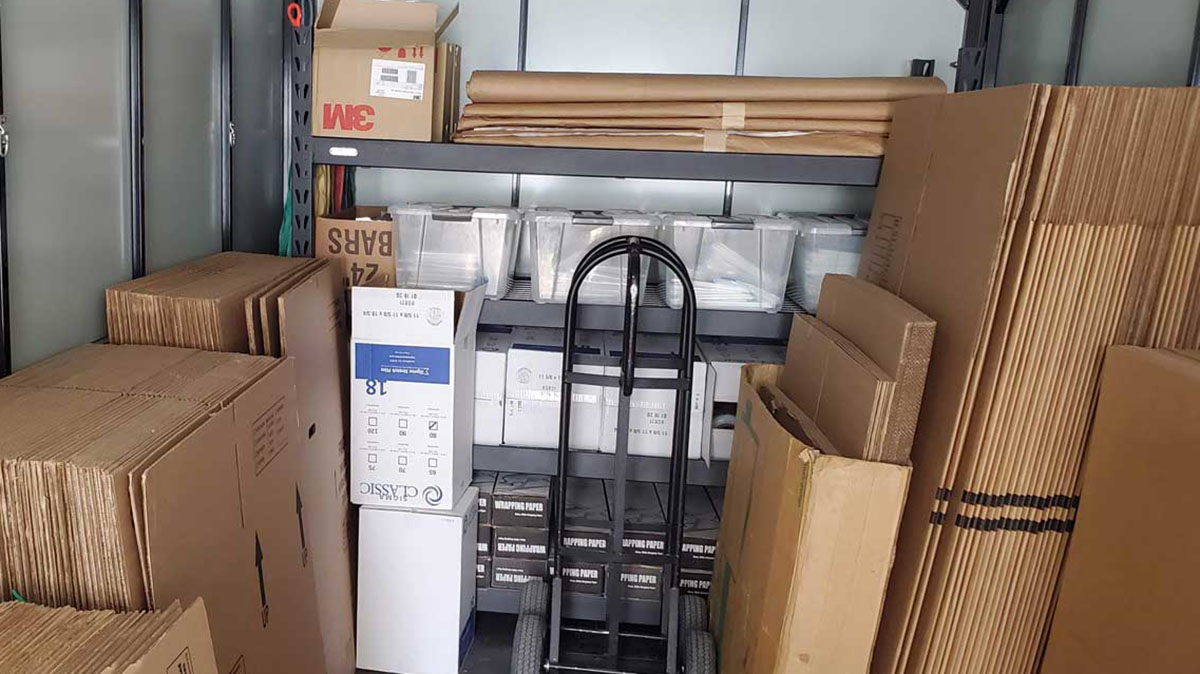
  • Ordering packing supplies
  • Developing the floor plan
  • Assigning employee responsibilities
  • Packing archived materials
  • Disconnecting technology
  • Completing the physical move
  • Reconnecting equipment
  • Testing essential systems
  • Removing remaining items from the old office

Allow extra time for access approvals, elevator reservations, furniture delivery, construction, and technology delays.

Assign a Move Coordinator

One person should serve as the primary contact for the moving company.

The coordinator should be able to:

  • Approve decisions
  • Answer inventory questions
  • Confirm placement
  • Communicate with building management
  • Coordinate employees
  • Identify priority items
  • Resolve unexpected issues

Multiple people giving conflicting instructions can slow the move.

Create a Destination Floor Plan

A clear floor plan can reduce confusion and unnecessary furniture handling.

The plan should identify:

  • Offices
  • Workstations
  • Departments
  • Reception
  • Conference rooms
  • Break rooms
  • Storage rooms
  • Copy areas
  • File rooms
  • Shared equipment
  • Furniture placement

Room numbers, workstation codes, or color-coded zones can be matched to labels on boxes and furniture.

Packing an Office

Employee Work Areas

Each employee should receive clear instructions about what to pack and what to leave for the moving crew.

Employees may be asked to:

  • Pack desk contents
  • Label personal items
  • Secure confidential materials
  • Remove food and liquids
  • Take personal valuables home
  • Label chairs and accessories
  • Disconnect approved electronics
  • Keep keys with designated personnel
  • Separate items that should not be moved

Boxes should be closed, taped, and labeled before the crew arrives.

Filing Cabinets

The handling of filing cabinets depends on their size, construction, contents, and travel conditions.

Before moving filing cabinets:

  • Confirm whether drawers should be emptied
  • Lock drawers when possible
  • Remove keys after locking
  • Secure loose drawers
  • Label the cabinet’s destination
  • Separate sensitive records when required
  • Avoid overloading cabinets

Lateral filing cabinets often need to be emptied before transportation because of their width and weight.

Books and Printed Materials

Books, manuals, catalogs, and paper files should generally be packed in small boxes.

Paper becomes extremely heavy when packed into large cartons. Smaller boxes are easier to carry, stack, and protect.

Break-Room and Kitchen Items

Food, dishes, appliances, and cleaning materials should be packed separately from office files and electronics.

Before moving:

  • Dispose of perishable food
  • Empty refrigerators
  • Defrost approved appliances
  • Drain coffee makers
  • Secure liquids
  • Remove hazardous cleaning chemicals
  • Pack dishes with suitable cushioning

Appliance disconnection and reconnection may require a qualified technician.

Computers and Electronics

Office technology should be handled through a coordinated plan.

Back Up Important Data

Complete backups before disconnecting computers, servers, or storage devices. A moving company cannot protect against data loss caused by hardware failure, improper shutdown, or incomplete backups.

Photograph Cable Connections

Photographs can help employees or IT staff reconnect equipment at the new location.

Label Each Component

Monitors, computers, docking stations, keyboards, cables, and accessories should be labeled by employee or workstation.

Pack Accessories Together

Cables, power supplies, mice, adapters, and other accessories should be placed in labeled bags or boxes.

Coordinate With IT Professionals

Moving crews can transport properly prepared electronics, but they generally do not replace qualified IT technicians.

IT personnel should handle:

  • Server shutdown
  • Network equipment
  • Data security
  • Cable management
  • System configuration
  • Reinstallation
  • Testing
  • Troubleshooting

Sensitive or highly specialized electronic equipment should be discussed before scheduling.

Confidential Files and Sensitive Materials

Businesses may possess records that require special handling under company policy, contractual obligations, or applicable law.

Examples may include:

  • Customer records
  • Employee files
  • Financial documents
  • Medical information
  • Legal files
  • Proprietary materials
  • Access credentials
  • Data-storage devices

The business is responsible for identifying sensitive materials and determining how they should be packed, transported, supervised, and secured.

Sensitive items may need to be:

  • Packed by authorized employees
  • Placed in sealed containers
  • Inventoried
  • Transported separately
  • Supervised during handling
  • Delivered directly to an authorized person

Moving Buddies should be informed in advance when special handling procedures are required.

Building Management Requirements

Commercial buildings often have moving rules that must be followed.

These may include:

  • Approved moving hours
  • Elevator reservations
  • Loading-dock scheduling
  • Certificate-of-insurance requirements
  • Floor and wall protection
  • Security access
  • Parking restrictions
  • Vendor registration
  • Property-management approval
  • After-hours procedures
  • Key or badge requirements
  • Restrictions on certain entrances

The customer should obtain and share all building requirements before confirming the moving schedule.

Elevator and Loading-Dock Reservations

Elevator and dock availability can affect the entire move.

Confirm:

  • Reservation times
  • Elevator dimensions
  • Weight limits
  • Door dimensions
  • Loading-dock height
  • Truck-size restrictions
  • Security check-in procedures
  • Required protective materials
  • Access to freight elevators
  • Overtime or after-hours charges

A missed reservation may delay service or prevent the move from proceeding as planned.

Parking and Access

The distance between the office and the moving truck directly affects labor time.

Important access details include:

  • Loading-zone availability
  • Parking permits
  • Downtown restrictions
  • Metered parking
  • Parking garages
  • Height clearances
  • Long hallways
  • Multiple floors
  • Stairs
  • Security checkpoints
  • Gated access
  • Service entrances
  • Loading ramps

These details should be disclosed during the estimate process.

Moving Desks and Workstations

Desks and workstations vary widely in construction and complexity.

Before moving them, determine:

  • Whether they fit through doorways
  • Whether they can be moved assembled
  • Whether drawers must be emptied
  • Whether components are permanently attached
  • Whether cables are integrated
  • Whether glass tops are removable
  • Whether a manufacturer-specific installer is needed

Modular office systems and cubicles may require specialized disassembly and installation services beyond ordinary furniture moving.

Moving Office Chairs

Office chairs should be labeled by employee, office, or department.

Loose chair components should be secured, including:

  • Headrests
  • Arm pads
  • Removable cushions
  • Floor mats
  • Accessories

Chair mats should be cleaned, rolled or protected appropriately, and labeled for their destination.

Printers, Copiers, and Office Equipment

Small desktop printers may be moved like other office electronics after proper preparation.

Large copiers, production printers, mailing machines, and specialized equipment may require:

  • Vendor preparation
  • Shipping locks
  • Fluid removal
  • Service-mode procedures
  • Specialized moving equipment
  • Manufacturer-approved transportation
  • Recalibration after delivery

The equipment vendor should be consulted before moving large or leased machines.

Items That Require Additional Planning

Some business items may require special equipment, additional crew members, or specialty services.

Examples include:

  • Large safes
  • Fireproof file cabinets
  • Commercial printers
  • Servers
  • Laboratory equipment
  • Industrial machinery
  • Medical equipment
  • Large conference tables
  • Stone or glass furniture
  • Commercial refrigerators
  • Vending machines
  • Fitness equipment
  • Oversized artwork
  • Sensitive electronics

Provide photographs, measurements, model information, and estimated weight when possible.

Office Storage Moves

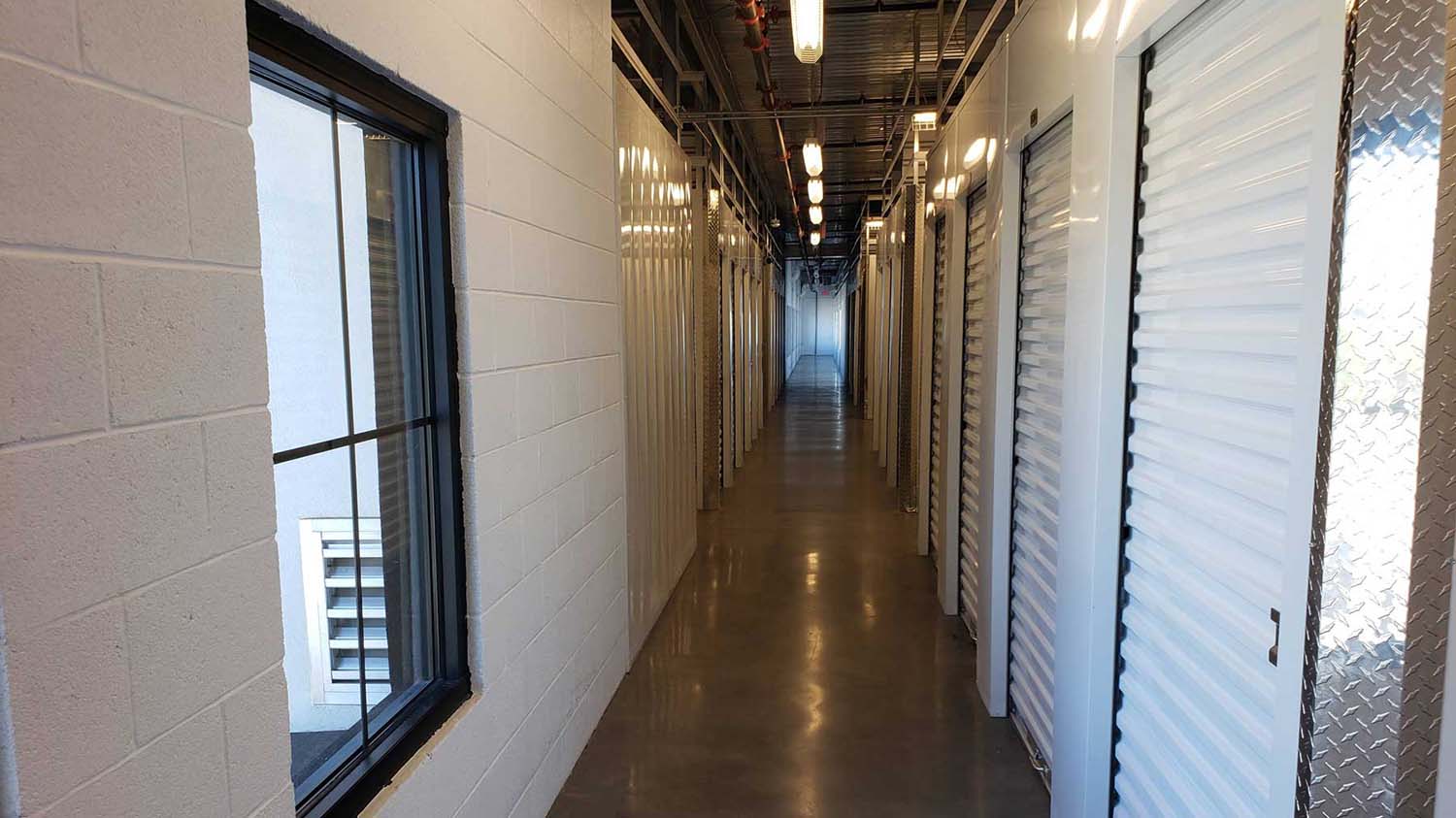
Moving Buddies can also assist businesses moving items into or out of storage.

This may include:

  • Archived files
  • Seasonal materials
  • Trade-show equipment
  • Extra furniture
  • Inventory
  • Marketing materials
  • Office supplies
  • Records awaiting disposal
  • Equipment awaiting installation

Storage items should be labeled and inventoried so that important materials can be located later.

Internal Office Rearrangement

A full relocation is not always necessary. Businesses may need help moving furniture within the same building.

Internal office moving may include:

  • Reorganizing workstations
  • Moving departments
  • Converting offices
  • Clearing rooms for renovation
  • Setting up conference spaces
  • Moving furniture between floors
  • Rearranging reception areas
  • Consolidating storage rooms

Building access and elevator requirements may still apply even when no moving truck is needed.

Preparation Tips

Before moving day:

  • Designate a move coordinator
  • Confirm building requirements
  • Reserve elevators and loading docks
  • Finalize the destination floor plan
  • Label all offices and workstations
  • Pack nonessential items early
  • Back up company data
  • Schedule IT support
  • Disconnect approved electronics
  • Empty refrigerators and break-room cabinets
  • Secure confidential records
  • Remove personal valuables
  • Clear hallways and work areas
  • Identify items that will not be moved
  • Confirm employee schedules
  • Provide the crew with placement instructions
  • Keep keys, access cards, and alarm information available

At the destination, clearly mark rooms and workstations before the movers arrive.

Factors That Affect Office Moving Time

The duration and cost of an office move depend on several factors, including:

  • Number of employees
  • Amount of furniture
  • Number of boxes
  • Workstation complexity
  • Amount of disassembly
  • Technology inventory
  • Filing-cabinet contents
  • Number of floors
  • Elevator access
  • Loading-dock availability
  • Walking distance
  • Parking conditions
  • Building restrictions
  • Specialty equipment
  • Packing readiness
  • Destination placement requirements
  • Whether after-hours service is needed

A well-prepared office can usually be moved more efficiently than one that is still packing or making layout decisions on moving day.

Getting an Accurate Estimate

To receive a more accurate office moving estimate, be prepared to provide:

  • Current and destination addresses
  • Requested moving date
  • Business type
  • Approximate office square footage
  • Number of employees or workstations
  • Number of desks and chairs
  • Estimated box count
  • Filing-cabinet quantity and type
  • Computer and monitor count
  • Printer and copier details
  • Conference-room furniture
  • Storage-room contents
  • Specialty or unusually heavy items
  • Number of floors
  • Elevator availability
  • Loading-dock information
  • Parking conditions
  • Building-management requirements
  • Packing-service needs
  • Disassembly and reassembly needs
  • Desired completion deadline
  • Photographs, videos, or inventory records when requested

Moving Buddies Tucson AZ can use this information to recommend an appropriate crew, estimate the likely labor requirements, and identify any preparation needed before moving day.

Moving Solutions Tailored for You

Ready To Begin Your Journey? Our
Experts Are Here To Help.
GET A QUOTE