Tucson amenities are different from what many newcomers expect.
In some cities, amenities mean indoor malls, polished town centers, private gyms, and master-planned clubhouse life. Tucson has some of that, but the real amenity system of The Old Pueblo is broader, more desert-based, more public, and more seasonal.
Tucson’s amenities include parks, river paths, washes, trailheads, mountain access, pools, splash pads, libraries, recreation centers, university resources, public art, museums, food culture, community events, senior programs, dog parks, golf, medical access, bike infrastructure, and the everyday convenience of living in a city surrounded by the Sonoran Desert.
This guide is not a list of specific neighborhoods, shopping centers, or exact restaurants. More specific local guides can cover those later. This is the general orientation: what people can expect when moving into the Tucson area, how amenities tend to work, and what to check before choosing a home.
The key idea is simple:
In Tucson, the best amenities are not always inside the subdivision. Some are public, some are regional, some are seasonal, and many are tied to the desert itself.
Tucson amenities are spread out. The city does not function like one compact urban core with every convenience radiating evenly from downtown.
Instead, amenities are layered across:
City parks.
County parks.
Neighborhood parks.
River parks and greenways.
The Loop shared-use path system.
National, state, county, and regional natural areas.
Libraries.
Recreation centers.
Pools and splash pads.
Senior and youth programs.
Sports fields and courts.
Public art and cultural institutions.
University-related resources.
Medical campuses and clinics.
HOA and master-planned community amenities.
Private gyms, studios, and clubs.
Outdoor recreation access.
That variety is one of Tucson’s strengths, but it also means the quality of amenities depends heavily on location, jurisdiction, lifestyle, and expectations.
A home can feel amenity-rich because it is near trails, parks, libraries, schools, medical care, and The Loop. Another home can feel amenity-rich because it has a private clubhouse, pool, and fitness center. A third can feel amenity-rich because it sits near desert open space and quiet roads.
Before moving here, decide which version of amenities matters most to you.
Parks are one of Tucson’s most important everyday amenities.
The City of Tucson Parks and Recreation department maintains active parks, passive recreation parks, natural and cultural resource parks, river parks and greenways, plazas, gardens, undeveloped park properties, and open space properties. City resources also point residents toward pools, splash pads, recreation centers, classes, reservations, sports, therapeutic recreation, teen programs, senior programs, and special events.
Pima County Parks and Recreation adds another layer with county parks, community centers, classes, pools, splash pads, and natural resource parks. Pima County describes its natural resource parks as protected spaces managed to preserve natural and cultural heritage while offering public recreation and stewardship opportunities.
For a newcomer, the practical takeaway is this:
Do not judge Tucson parks only by the closest playground.
Tucson park life includes picnic areas, sports fields, ramadas, walking paths, desert open space, shaded play areas, pools, splash pads, event lawns, regional trail connections, tennis, pickleball, basketball, dog areas, and natural-resource areas.
When considering an area, look for:
Nearest city or county park.
Nearest shaded playground.
Nearest pool or splash pad.
Nearest recreation center.
Nearest trail access.
Nearest dog park or pet-friendly open space.
Parking availability.
Restrooms and water access.
Lighting.
Ramadas or reservable picnic areas.
Sports fields or courts.
Whether the park feels active, quiet, maintained, or remote.
A park five minutes away may be more useful than a private amenity you rarely use.
Water amenities matter in Tucson because heat is part of daily life.
The City of Tucson publishes pool and splash pad information, including splash pad season details and individual pool schedules. Pima County also operates pools and splash pads, with programs that can include recreational swimming, competitive swimming, lessons, and water exercise.
These amenities are not just for children. They are part of the heat-adaptation system of the city.
Schedules vary by facility.
Some pools are seasonal.
Some splash pads operate during warmer months.
Hours can change with staffing, maintenance, weather, or programming.
Public pools may have lap swim, recreational swim, lessons, youth programs, and accessibility-oriented programs.
HOA pools may have their own rules, guest limits, hours, key systems, and closure schedules.
Apartment pools are convenient, but quality varies widely.
In Tucson, a pool is not always a luxury feature. For some households, it is a practical summer amenity.
But pools come with tradeoffs. A private pool can be wonderful, but it also brings maintenance, utilities, chemicals, cleaning, safety rules, repairs, and insurance considerations. A community pool may be easier, but you share access and rules.
If a pool matters to your household, do not simply ask, “Is there a pool?”
Ask:
Is it private, HOA, apartment, city, county, or club-based?
What are the hours?
Is it heated?
Is it open year-round or seasonal?
Who maintains it?
Are there guest limits?
Are there swim lessons or programs nearby?
Are there splash pads for younger children?
A Tucson summer can make that difference feel very important.
The Chuck Huckelberry Loop, usually called The Loop, is one of the Tucson area’s signature amenities.
Pima County describes The Loop as approximately 140 miles of paved shared-use paths and short buffered bike-lane segments connecting river parks, washes, and greenways through unincorporated Pima County, Marana, Oro Valley, Tucson, and South Tucson.
The Loop is more than a bike path. It is a regional lifestyle amenity.
It supports:
Cycling.
Walking.
Running.
Skating.
Family rides.
Dog walking.
Commuting in some areas.
Connections to parks.
River and wash corridors.
Public art.
Fitness routines.
For people moving to Tucson, access to The Loop can change how an area feels. A home that connects conveniently to The Loop may offer a very different daily routine than a home that requires driving for every outdoor activity.
How close is the nearest Loop access point?
Can you reach it safely by bike or on foot?
Is the access shaded, paved, and comfortable?
Are there nearby restrooms, water fountains, benches, or parks?
Does the path segment connect to places you actually want to go?
Is the route comfortable during summer mornings or evenings?
The Loop is one of the best examples of Tucson’s public amenity culture: useful, regional, outdoor, and tied to washes and river corridors rather than only to private development.
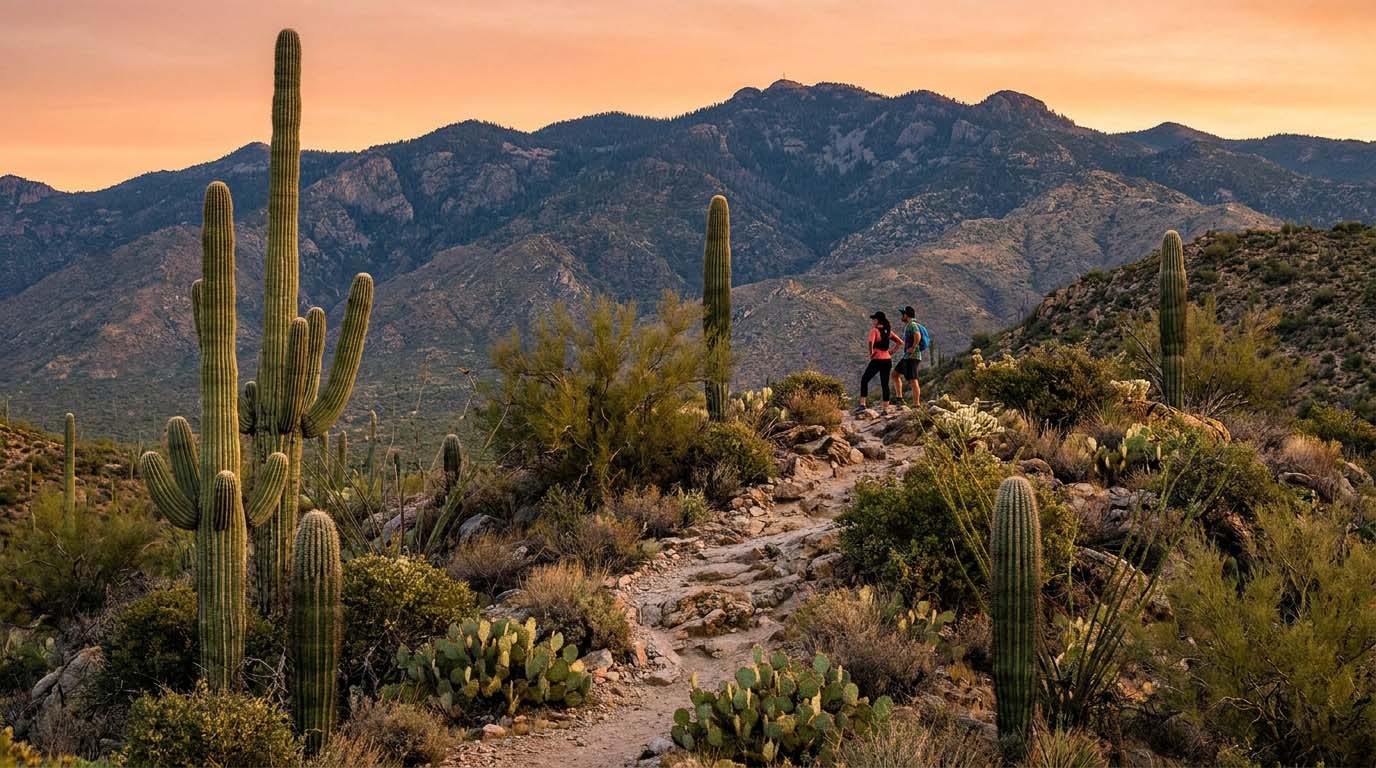
One of Tucson’s greatest amenities is geography.
The city is surrounded by mountains and desert landscapes. Visit Tucson describes the area as home to museums, historic sites, hiking trails, golf courses, unique flora and fauna, gardens, zoos, the university campus, and outdoor attractions. Its hiking guidance notes that Tucson is surrounded by five mountain ranges and has extensive trails, with Saguaro National Park framing the city on the east and west.
That means outdoor recreation is not an occasional weekend add-on. For many residents, it is part of the reason to live here.
Common outdoor amenity categories include:
Hiking.
Trail running.
Mountain biking.
Road cycling.
Birding.
Horseback riding in some areas.
Desert photography.
Scenic drives.
Stargazing.
Nature education.
Canyon and wash exploration.
National, state, county, and local park access.
Tucson trails are beautiful, but they are not amusement-park amenities.
They require heat awareness, water, sun protection, proper footwear, route planning, wildlife awareness, and respect for fragile desert ecosystems.
A trailhead near your home can be a major amenity, but it can also bring:
Traffic.
Parking spillover.
Early-morning activity.
Tourist traffic.
Dust.
Wildlife presence.
Trail etiquette issues.
Homes near open desert may feel peaceful, but residents should also expect snakes, coyotes, javelina, scorpions, packrats, cactus, and monsoon drainage realities.
Pima County Public Library is an important everyday amenity across the region.
Libraries are not just places to borrow books. The system offers locations, events, classes, public technology resources, children’s programming, teen programming, adult learning, summer reading, community information, cooling-related resources, and meeting-place value.
For families, remote workers, students, seniors, job seekers, and newcomers, a good library branch can become one of the most useful local resources.
A nearby library can help with:
Children’s programs.
Quiet study.
Job searches.
Printing or internet access.
Community events.
Local information.
Book clubs.
Language and literacy support.
Teen activities.
Senior activities.
Cooling and safe indoor time during hot periods.
Libraries are especially valuable because they are low-cost, public, and community-oriented. In a hot-weather city, indoor public amenities matter.
Tucson’s recreation centers and Pima County community centers add another practical layer of amenities.
Depending on facility and season, programming can include youth activities, teen programs, senior programs, sports, classes, camps, therapeutic recreation, fitness activities, after-school programs, and special events.
These are especially important for families, seniors, and people who want structured community activity without relying entirely on private clubs.
Nearest recreation center.
Youth program availability.
Senior program availability.
Summer camp options.
Sports leagues.
Therapeutic recreation options.
Indoor activity options during extreme heat.
Facility hours.
Program registration process.
Whether programs fill quickly.
Amenities are not only physical features. Programming matters.
A city can have parks and buildings, but the real value comes from what residents can actually do there.
Tucson supports a wide range of active recreation.
Depending on area and facility, residents may find:
Soccer fields.
Baseball and softball fields.
Basketball courts.
Tennis courts.
Pickleball courts.
Volleyball areas.
Skate parks.
Golf courses.
Disc golf.
Fitness paths.
Public exercise stations.
Aquatics programs.
Private gyms and studios.
Youth sports leagues.
Adult sports leagues.
The City of Tucson Parks and Recreation system includes sports programming and facility reservations, while county and private facilities add additional options.
Outdoor exercise is excellent here, but timing matters.
Summer fitness often shifts to early mornings, evenings, pools, gyms, shaded paths, or indoor facilities. Winter and spring can feel like peak outdoor season, which means popular trails, courts, and parks may be busier.
If fitness is central to your lifestyle, evaluate both summer and winter options.
Do not assume that a beautiful outdoor amenity will be comfortable at 3 p.m. in July.
Tucson’s amenities are not limited to recreation.
Public art is a visible part of the city. The Arts Foundation for Tucson and Southern Arizona stewards the public art process for the City of Tucson and Southern Arizona, and provides an interactive map for discovering public art sites. Pima County also maintains a public art collection with more than 100 permanently sited and integrated works.
This matters because Tucson’s public spaces often carry cultural expression: murals, bridge art, tile work, sculptures, memorials, neighborhood art, campus art, and infrastructure-integrated projects.
For newcomers, public art is part of the city’s identity.
It helps Tucson feel less generic than many metro areas. You may see art on underpasses, libraries, parks, streetscapes, university spaces, county facilities, and neighborhood walls.
Public art contributes to:
Neighborhood identity.
Wayfinding.
Cultural memory.
Civic pride.
Walkability.
Tourism.
Photo-friendly spaces.
Community storytelling.
Tucson’s amenities are often about sense of place. Public art is one reason the city feels local, not interchangeable.
Tucson has a strong culture-and-education amenity layer.
Visit Tucson describes the city as having a wide range of museums, historic sites, gardens, zoos, the university campus, and attractions. The Arizona-Sonora Desert Museum describes itself as a fusion of zoo, botanical garden, art gallery and classes, natural history museum, and aquarium. Tucson Botanical Gardens describes its mission around connecting people with plants and nature through art, science, history, and culture.
This type of amenity is important for residents, not just tourists.
Cultural institutions can provide:
Family outings.
Educational programs.
Membership value.
Visitor entertainment.
School enrichment.
Volunteer opportunities.
Art and science exposure.
Desert literacy.
Community events.
For people relocating from larger metros, Tucson may feel smaller in some commercial ways, but its cultural and science amenities are strong for a city of its size.
Education amenities go beyond the nearest school.
The Tucson area includes public school districts, charter schools, private schools, Pima Community College, the University of Arizona, libraries, museums, STEM institutions, arts organizations, youth sports, tutoring options, trade training, and lifelong-learning resources.
For families, the practical question is not only, “What school is assigned to this address?”
It is also:
What after-school programs are nearby?
What libraries serve the area?
What youth sports are accessible?
What summer programs exist?
What museums and science resources are realistic to visit?
What commute will school drop-off create?
What teen amenities exist?
What college or workforce-training resources are available?
In Tucson, education amenities are regional. A family may choose a home based on schools, but the broader child-and-family amenity network often includes parks, libraries, camps, recreation centers, sports facilities, and cultural institutions.
Medical access is a major amenity in the Tucson area.
The region serves families, retirees, veterans, university communities, rural Southern Arizona residents, seasonal residents, and people relocating for health, caregiving, or retirement reasons.
For newcomers, medical amenities can include:
Hospitals.
Urgent care.
Primary care.
Specialists.
Dental care.
Vision care.
Veterinary care.
Physical therapy.
Senior care.
Behavioral health.
Pharmacies.
Medical imaging and diagnostics.
Veterans services.
Home health and caregiving.
The important Tucson-specific issue is geography. A medical provider may be “in Tucson” but still be inconvenient from your home depending on traffic, side of town, parking, and appointment timing.
Before relocating a senior, medically complex household, or family with frequent appointments, map the actual drive to care providers.
Ask:
How far is primary care?
How far is the preferred hospital?
How far are specialists?
Is the route easy during rush hour?
Is parking manageable?
Are there nearby pharmacies?
Are home-health and caregiving services available in the area?
Medical convenience can be more important than a clubhouse.
Tucson has many amenities that matter to older adults, retirees, seasonal residents, and families helping a parent relocate.
These may include:
Senior centers.
Recreation programs.
Libraries.
Medical access.
Walking paths.
Pools and water exercise.
Golf.
Volunteer opportunities.
Faith communities.
Adult education.
Accessible transportation.
Retirement communities.
Assisted living.
Caregiving services.
Home maintenance providers.
Downsizing and storage services.
The key distinction is between lifestyle amenities and support amenities.
A retirement-oriented area may offer pools, clubs, golf, and social calendars. But a practical senior move also needs medical access, transportation, maintenance support, safe walking, nearby services, and reliable emergency access.
Are sidewalks or walking paths usable?
Is there shade?
Are streets quiet enough for walking?
Are medical services convenient?
Are recreation programs designed for older adults?
Is public transportation or senior transportation practical?
Does the HOA handle exterior maintenance?
Are homes single-level or accessible?
Is there room for caregivers, family visits, or medical equipment?
Amenities should support the life someone actually lives, not just look good on a brochure.
Pets are part of daily life in Tucson, but desert living changes the pet amenity checklist.
Useful pet amenities include:
Dog parks.
Pet-friendly parks and paths.
Veterinary clinics.
Emergency vet access.
Pet boarding.
Grooming.
Shaded walking routes.
Fenced yards.
Safe flooring and cooling.
Access to The Loop or walking paths.
HOA pet rules.
Apartment pet policies.
Heat matters.
Pavement can get dangerously hot.
Shade matters.
Water matters.
Coyotes, javelina, snakes, scorpions, and cactus matter.
Gates and fences matter.
Open-space access can be wonderful, but it also means more wildlife interaction.
A dog-friendly home in Tucson is not just a home near a park. It is a home with safe walking times, shade options, fencing, nearby veterinary care, and clear HOA or rental rules.
Tucson is largely car-oriented, but transit and bike infrastructure matter.
Sun Tran provides bus service, and Sun Link streetcar service connects important central areas. Sun Tran route resources include trip planning, rider guides, and mobile apps, and the system has offered fare-free transit under Mayor and Council direction. Sun Tran also provides Bike & Ride, allowing riders to bring bikes on transit at no extra charge.
For a newcomer, the important question is not whether Tucson has transit in general.
The question is whether transit works for your specific routine.
Distance to the nearest bus stop.
Frequency of the route.
Whether the route connects directly or requires transfers.
Access to the streetcar if relevant.
Bike comfort on nearby roads.
Access to The Loop.
Sidewalk quality.
Shade.
Crosswalk safety.
Distance to schools, work, medical care, and daily services.
Even if you own a car, mobility amenities affect teenagers, seniors, students, workers, visitors, and households with one vehicle.
Many Tucson-area communities have private amenities controlled by an HOA, apartment community, condo association, or master-planned development.
Common private amenities may include:
Pools.
Spas.
Fitness rooms.
Clubhouses.
Meeting rooms.
Parks.
Pocket parks.
Playgrounds.
Walking paths.
Gates.
Private streets.
Common-area landscaping.
Tennis or pickleball courts.
Basketball courts.
Golf access.
Dog areas.
Community events.
Exterior maintenance.
Private security patrols.
These can be valuable, but they are not free. They are funded through dues, rent, assessments, or fees.
What are the monthly dues?
What amenities are included?
Are there separate facility fees?
Are guest passes limited?
Are pools heated or seasonal?
Are courts reservable?
Are there rules about parties or gatherings?
Are amenities well maintained?
Are reserves strong enough to maintain them?
Are major repairs or special assessments expected?
Are renters allowed to use all amenities?
Does the HOA restrict moving trucks, storage containers, or parking?
Private amenities can make daily life easier, but the rules matter as much as the features.
Tucson has many amenities, but they are not evenly distributed.
Some areas have better trail access.
Some have stronger public transit.
Some have more libraries or recreation centers nearby.
Some have more private HOA amenities.
Some have better sidewalks.
Some have more shade.
Some have easier medical access.
Some have newer parks.
Some have older parks with more character but fewer modern facilities.
Some have open desert but fewer indoor amenities.
Some have great views but longer drives.
That is normal in a spread-out desert metro.
Before moving, rank your priorities. The right Tucson location for a cyclist may not be the right location for a senior needing medical access. The right location for a trail runner may not be the right location for a family needing after-school programs. The right location for privacy may not be the right location for transit.
Tucson amenities change by season.
Winter and spring are outdoor seasons.
Summer pushes activity earlier, later, indoors, or into water.
Monsoon storms can interrupt trails, washes, roads, events, and outdoor plans.
Snowbird season can make certain amenities, roads, restaurants, parks, and medical services feel busier.
University cycles can affect traffic, rentals, storage, moving demand, event calendars, and central-area activity.
Event seasons can affect hotels, parking, and traffic near major venues.
Look at both summer and winter versions of an area.
Visit parks at the time of day you would actually use them.
Check shade, not just distance.
Check pool access before summer.
Book programs early.
Expect trails to be busier in pleasant weather.
Build flexibility into outdoor plans during monsoon.
Do not underestimate heat when evaluating walkability.
A place that is walkable in February may feel very different in July.
Amenities can affect the move itself.
A gated community may require access codes and move-in windows.
A condo may require elevator reservations and insurance certificates.
An HOA may restrict moving containers, trailers, commercial vehicles, or overnight truck parking.
A street near a park or trailhead may have weekend parking pressure.
A property near a wash or narrow road may require careful truck placement.
A home near a community center, school, or event venue may have traffic patterns you should know before move day.
Ask whether a moving truck can park at the curb.
Ask whether a container or trailer is allowed.
Confirm gate access.
Reserve elevators or loading zones.
Check event calendars if moving near major parks, campuses, or venues.
Plan move times around heat.
Keep walkways clear of cactus, rock borders, irrigation lines, and landscaping.
Do not block trail access, sidewalks, fire lanes, or neighbors’ driveways.
Amenities are great, but they can create rules and access issues during move-in.
Use a practical test.
Do not simply ask, “What is nearby?”
Ask, “What will I use every week?”
Check parks, splash pads, libraries, schools, recreation centers, sports fields, sidewalks, shade, childcare, youth programs, and safe bike or walking routes.
Check medical access, walking paths, pools, senior programs, libraries, maintenance services, transit options, HOA rules, and social opportunities.
Check trailheads, The Loop, bike routes, shade, secure gear storage, water access, parks, and drive times to mountain or desert recreation.
Check internet options, libraries, coworking options, coffee-shop alternatives, quiet streets, home-office space, power reliability, and daily walk routes.
Check fencing, shade, dog parks, walkability, wildlife exposure, emergency vet access, HOA pet rules, and pavement heat realities.
Check transit, bike access, storage, parking, rental rules, noise, libraries, study spaces, and campus commute.
Check lot size, open space, road noise, HOA rules, trailhead proximity, lighting, short-term rental presence, and emergency access.
The best amenity profile is personal.
Shopping and dining matter, but Tucson’s strongest amenities include parks, trails, The Loop, libraries, pools, public art, cultural institutions, outdoor recreation, university resources, and desert access.
Some of Tucson’s best amenities are public or regional. A neighborhood without a private clubhouse may still have great park, trail, library, and cultural access.
Outdoor access is excellent, but heat, sun, drainage, wildlife, and water planning are real. Desert amenities require desert awareness.
Usually it is, but trail proximity can also bring parking, early activity, visitors, dust, and wildlife. Check the actual access point and use pattern.
A well-managed pool can be excellent. A poorly maintained pool, expensive private pool, or restrictive HOA pool may not fit your needs.
Some parts are walkable, but Tucson is mostly car-oriented. Shade, sidewalks, crossings, distance, and summer heat all affect real walkability.
Before choosing a home, check:
Nearest park.
Nearest library.
Nearest pool or splash pad.
Nearest recreation or community center.
Nearest Loop access.
Nearest trailhead or open space.
Nearest medical care.
Nearest pharmacy.
Nearest pet care.
Transit options.
Bike route quality.
Sidewalks and shade.
HOA amenities and rules.
Pool access and cost.
Program availability for children, teens, adults, or seniors.
Seasonal limitations.
Summer usability.
Monsoon drainage.
Moving-truck and container rules.
The right Tucson amenities are the ones you will actually use.
Tucson amenities are not one-size-fits-all.
The Old Pueblo offers parks, paths, pools, splash pads, libraries, recreation centers, trails, public art, museums, gardens, medical access, sports, senior programs, dog-friendly spaces, transit options, university resources, and desert access.
But these amenities are spread across city, county, town, HOA, private, and regional systems.
That is why a smart move to Tucson means looking beyond the house.
Look at the daily routine.
Where will you walk?
Where will your kids play?
Where will you cool off?
Where will you exercise?
Where will you take visitors?
Where will you go for medical care?
Where will your dog safely walk?
Where will you spend summer afternoons?
Where will you go when you need community, shade, culture, or quiet?
In Tucson, amenities are not just features. They are part of how you adapt to the desert, connect with the city, and build a life in The Old Pueblo.



.svg)