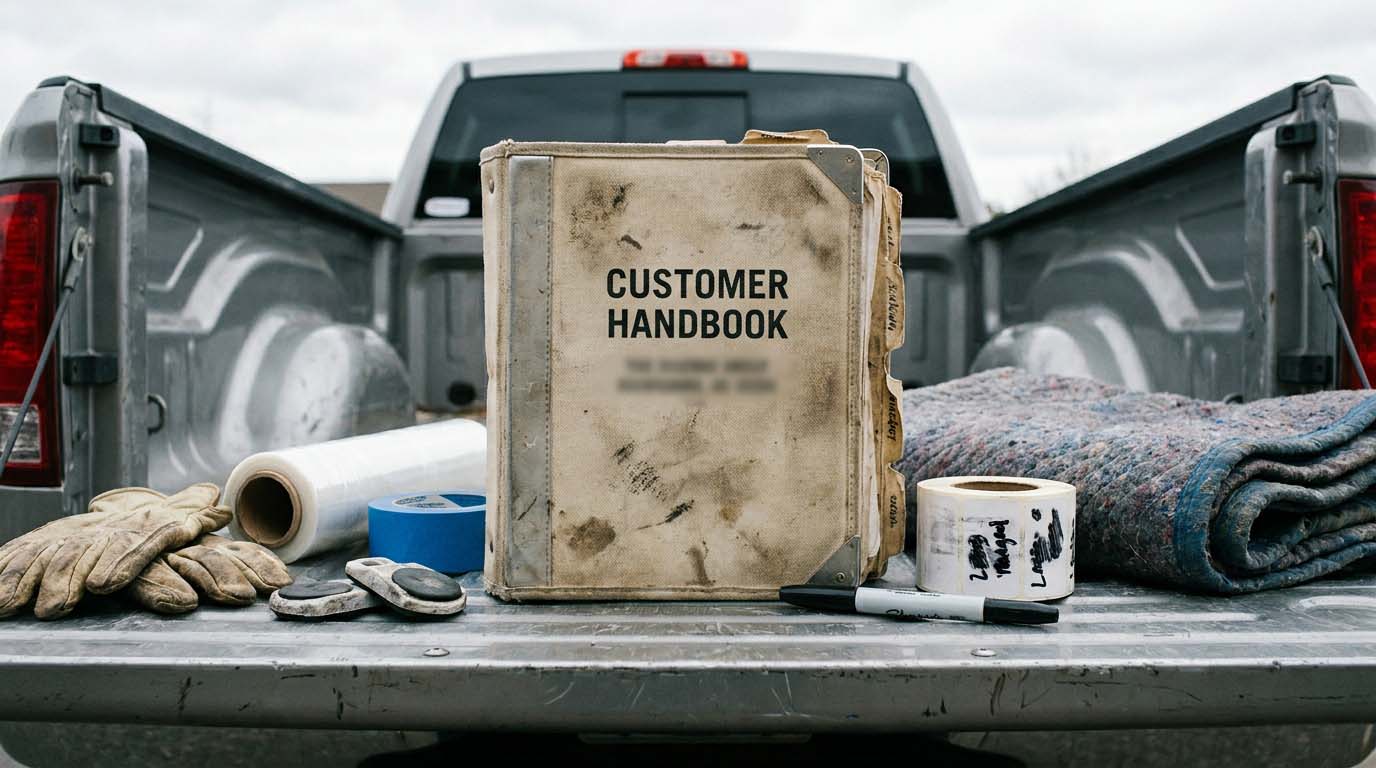

A moving contract is not just paperwork. It is the operating system for the move.
It defines what is being moved, who is responsible for it, how the price can change, when payment is due, what happens if there is damage, and what remedies exist if something goes wrong.
For interstate household-goods moves, the Federal Motor Carrier Safety Administration, commonly called FMCSA, requires movers to provide important consumer-rights materials and written move documents such as the estimate, order for service, and bill of lading. Local and intrastate moves may be governed by different state rules, but the same contract-reading habits still protect the customer.
Before signing, you should be able to answer five basic questions:
Fast rule: Do not sign a moving document you cannot explain back in plain English. If a clause affects price, liability, timing, or cancellation, it should be clear before the crew arrives.
Moving paperwork can feel repetitive, but each document has a different job. Treat them as a chain, not as isolated forms.
The estimate is the price framework. For interstate moves, FMCSA states that movers must prepare a written estimate for every shipment, including transportation, accessorial, and advance charges.
A casual “rate quote” is not the same thing as a formal estimate.
The order for service is the work order. It should reflect the move dates, pickup and delivery details, services requested, payment terms, and important conditions.
The bill of lading is the actual contract and receipt for the shipment. Do not treat it like a basic delivery slip.
For interstate moves, the bill of lading must be issued before loading. It should be checked against the estimate and order for service before anything goes on the truck.
The inventory is the item and condition record. This matters for damage claims, missing-item disputes, and proof of what the mover accepted.
If an item is already scratched, dented, loose, cracked, or fragile, the condition should be noted accurately.
Many moving disputes begin with the word estimate.
A binding estimate generally limits the price to the agreed scope, but only if the inventory and services match what was quoted.
A non-binding estimate is an approximation. FMCSA materials explain that actual charges may be higher, and delivery rules differ based on the estimate type.
For interstate moves, one important rule is that a mover generally must deliver the shipment when the customer pays:
with remaining lawful charges billed afterward.
For local hourly moves, the bigger issue is usually not whether the quote is called “binding” or “non-binding.” The bigger issue is the assumptions behind the quote.
Ask how the price changes if there are:
A clean contract does not pretend these variables do not exist. It explains how they are handled.
You do not need to be a lawyer to read a moving contract. You need to slow down on the clauses that decide money, responsibility, and timing.
This section should explain what rooms, items, stops, services, packing tasks, and specialty items are included.
A vague scope creates room for confusion. A clear scope reduces conflict.
Look for the hourly rate, minimums, travel time, fuel or trip fees, materials, valuation charges, overtime, wait time, and after-hours charges.
If the contract mentions additional charges, make sure you understand when they apply.
Payment terms should state the accepted forms of payment, when payment is due, whether a deposit is required, and whether any deposit is refundable.
FMCSA guidance says the payment form should be specified on interstate estimates and bills of lading, and it should be honored unless changed in writing.
Change orders explain what must happen before the company can add services or charges.
Verbal changes are where conflict grows. If the scope changes, the updated scope and price impact should be written down.
Accessorial services are add-ons beyond the basic move.
These may include:
Do not assume these are automatically included.
This section explains what level of protection applies if items are lost or damaged.
This is one of the most important parts of the contract, and it is often misunderstood.
The contract should explain how to file a claim, what evidence is required, and how quickly you must act.
Claims procedures matter. A customer may have a valid complaint but still run into trouble if they miss the required process or deadline.
Look for how much notice is required, whether fees apply, and what happens if the move date changes.
This matters for both the customer and the moving company because move dates are capacity-based.
This is one of the most misunderstood parts of moving contracts.
FMCSA explains that movers are responsible for the value of goods they transport, but customers must understand the available levels of liability.
For interstate moves, movers typically discuss two main types of protection:
Released value is minimal protection. It should not be confused with replacement-cost insurance.
Full-value protection is stronger, but it still has terms, exclusions, deductibles or minimum claim rules, and procedures.
Before signing, ask these questions:
If a company says “you are covered,” ask them to point to the exact clause that explains how.
The Better Business Bureau and moving-industry consumer guidance repeatedly warn customers to research movers, verify credentials, and be cautious of scams involving major price hikes, missing goods, hostage-load situations, and vague service terms.
The ATA Moving & Storage Conference also encourages consumers to get multiple estimates based on in-person or virtual surveys and to be wary of ultra-low or too-good-to-be-true estimates.
Watch for these warning signs:
A good mover should be able to explain the paperwork without making the customer feel trapped, rushed, or confused.
A common contract failure is timing.
Many customers first see the most important paperwork when the truck is in the driveway, the crew is waiting, and the whole household is under pressure.
That is the worst moment to study legal terms.
Ask for sample paperwork before move day. Confirm the rate, services, valuation choice, payment method, cancellation terms, and any likely add-on charges before the crew arrives.
On move day, compare the bill of lading and inventory to the prior estimate.
If something material has changed, pause and ask for a written explanation.
If an item is already damaged, make sure the condition is noted accurately.
If additional work is requested, get the revised scope and price impact in writing before the work proceeds.
Before signing, you should be able to check these boxes:
A good moving contract should not feel like a trap door.
It should clarify expectations, reduce conflict, and make the move easier to manage.
The best protection is not paranoia. It is written clarity.
Read the estimate, order for service, bill of lading, inventory, payment terms, and valuation language before move day.
If the paperwork does not match the sales conversation, fix the paperwork before you sign.
This guide references consumer education and moving-contract guidance from the Federal Motor Carrier Safety Administration, including materials related to “Your Rights and Responsibilities When You Move,” “Protect Your Move,” “Estimating Charges,” “Before Requesting Services from Any Mover,” and “Liability & Protection.”
It also references consumer guidance from the Better Business Bureau, ATA Moving & Storage Conference, and Arizona Department of Public Safety / Arizona Commerce household-goods enforcement references.
Note: This guide is educational and is not legal advice. Interstate moves and local or intrastate moves may follow different rules. Customers should verify current requirements with the appropriate regulator and read the actual contract before signing.



.svg)