
Scheduling a move is simple when the move details are clear. The main job is to reserve the crew early enough, give the mover accurate information, confirm access rules, and understand what happens if the date changes.
This guide explains how Moving Buddies Tucson AZ handles scheduling at a practical level. It also explains why reservation policies exist: movers are not just reserving a truck. They are reserving a trained crew, route space, equipment, and a workday that cannot always be replaced at the last minute.
The simple rule is this:
Book as soon as your move date is realistic, but do not treat the reservation casually once the crew is held for you.
Moving Buddies recommends contacting movers at least two weeks before a move, about a month ahead during summer, and around 60 days ahead for large homes or large office moves. That guidance is especially important in Tucson because summer heat, end-of-month demand, leases, closings, and crew availability can all compress the calendar.
You do not need every detail finalized before making initial contact. In fact, it is usually better to start the conversation early so the move strategy can be built correctly.
Start early when you have:
A closing date.
A lease deadline.
An elevator reservation.
HOA or building restrictions.
A large home.
A large office move.
Packing needs.
Storage involved.
More than one stop.
Heavy or oversized items.
A senior move.
A long-distance or statewide move.
Major national moving-company checklists commonly organize move planning around an eight-week timeline. Mayflower recommends starting a moving planner eight weeks ahead, and Allied also frames its moving checklist around a two-month countdown. For local Tucson moves, you may not always need that much lead time, but the principle is useful: the earlier the plan starts, the fewer details are rushed.
For a small, straightforward local move, try to book at least two weeks ahead.
For summer moves, end-of-month moves, weekend moves, apartment turnover periods, or moves with elevators or strict access rules, aim for about one month ahead.
For large homes, large offices, packing-heavy moves, specialty items, or complicated logistics, start the conversation about 60 days ahead.
Last-minute moves are sometimes possible, but they usually have fewer scheduling options. You may have less choice over crew size, start window, truck availability, or preferred day.
A moving reservation holds a place in the operating schedule.
Depending on the move, it may reserve:
Crew time.
Truck availability.
Moving equipment.
Route planning.
Office coordination.
Packing materials, if requested.
Specialty handling preparation.
That is why a reservation is different from a casual inquiry. Once a crew is assigned to your move, those workers may not be available for another customer. If the customer cancels late or treats the reservation as tentative, the company may lose the workday and the crew may lose hours.
The final step to booking a Moving Buddies appointment is submitting a deposit.
Reservations require a nominal deposit of up to 50% of the cost. Moving Buddies usually asks for about 20%, unless there are abnormal expenses to consider, such as lodging for crews or extensive packing material costs.
The deposit amount is credited directly to the moving bill.
In plain English:
The deposit is not an extra fee when the move goes forward. It holds the appointment and is applied to the final bill.
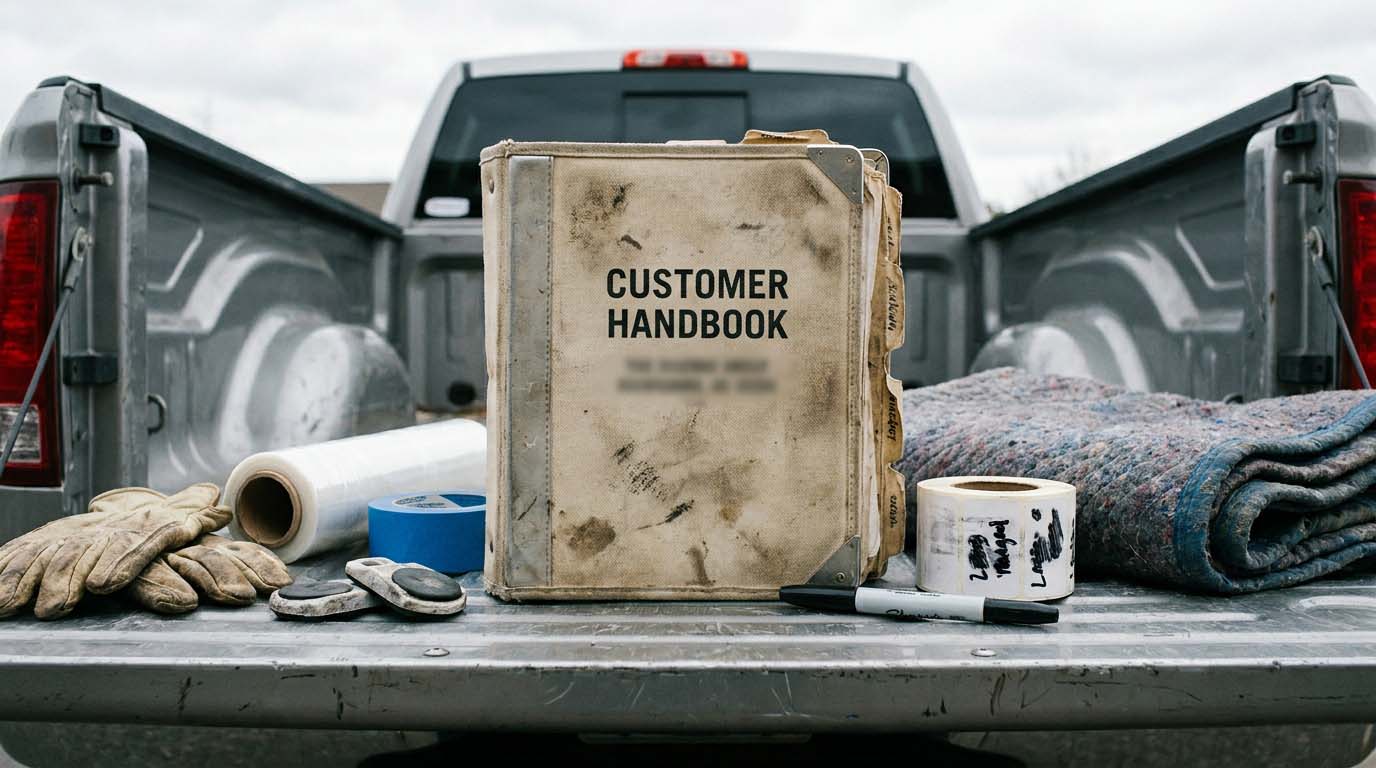
Moving Buddies’ customer handbook states that a nominal deposit is required to reserve a crew, deposits are non-refundable under any circumstances, and rescheduling is treated the same as canceling. The policy is designed to protect the employees’ scheduled hours.
This means customers should not reserve a date until they are prepared to commit to that date.
If there is uncertainty around a closing, lease, elevator reservation, or property access, communicate that before booking so the schedule can be handled realistically.
Moving Buddies also states that the company will complete the job on the day it was scheduled or refund the deposit.
The practical balance is simple:
The customer commits to the reservation, and Moving Buddies commits to showing up and completing the scheduled job day under the agreed service terms.
A reservation locks in the appointment, but the move plan can still change if the move details change.
Common changes include:
More boxes.
More furniture.
Added stops.
Packing that was not completed.
Additional stairs.
Elevator restrictions.
Parking limitations.
Long carries.
Safes.
Pianos.
Refrigerators.
Oversized items.
Large TVs.
New packing-supply needs.
Moving Buddies’ customer handbook says a move coordinator contacts the customer the day before the move, and this is the final opportunity to report changes to the conditions of the move. The handbook specifically asks customers to disclose flat-screen TVs, safes, pianos, refrigerators, oversized items, packing requirements, and any packing supplies they want brought to the job.
Do not assume the truck automatically carries packing materials.
Moving Buddies’ handbook states that trucks are not sent out with packing materials unless the customer has made a prior request.
If you need TV packaging, mattress bags, boxes, paper, tape, wardrobe boxes, or other supplies, request them before moving day.
This helps the company send the right equipment, materials, and manpower.
Before reserving, prepare the basics:
Pickup address.
Delivery address.
Move date.
Preferred time window.
Home type.
Stairs.
Elevators.
Parking conditions.
Truck access.
Gate codes.
Storage details.
Number of rooms.
Approximate box count.
Large furniture.
Appliances.
Specialty items.
Packing needs.
Extra stops.
The estimate and the schedule are only as accurate as the information provided.
A two-bedroom apartment with elevator access is not the same schedule as a two-bedroom apartment with three flights of stairs and a long carry.
A house with a normal driveway is not the same as a foothills home with a steep approach and limited truck turnaround.
After the reservation is made, confirm:
Move date.
Arrival window.
Pickup and delivery addresses.
Services included.
Deposit paid.
Payment method.
Parking plan.
Elevator reservation.
Gate access.
HOA or building rules.
Packing responsibilities.
Appliance responsibilities.
Move-day point of contact.
United Van Lines notes that moving companies often require flexibility around pickup and delivery dates, especially for standard service and long-distance moves. Local moves usually have tighter day-of scheduling, but the lesson still applies: customers should understand the difference between a preferred time, an arrival window, and a guaranteed commitment.
The day-before check-in is important.
Use it to confirm the final version of the move.
Tell the coordinator if:
The inventory changed.
Packing is not finished.
A large TV needs special handling.
A refrigerator or safe was added.
A building issued new rules.
The gate code changed.
Parking is blocked.
An elevator reservation changed.
You need packing supplies.
Do not wait until the crew is standing in the driveway to explain that the move is larger, harder, or less prepared than expected.
On moving day, be ready before the arrival window starts.
Keep phones on.
Clear parking.
Open gates.
Secure pets.
Have a decision maker present.
Keep valuables and essentials with you.
Show the crew what is going.
Show the crew what is not going.
Point out anything that needs special care.
A prepared start saves time.
An unprepared start can slow the entire job and may affect the final cost.
The most common mistake is booking too late.
Other common mistakes include:
Reserving before the date is realistic.
Failing to mention elevator rules.
Failing to mention HOA rules.
Underreporting inventory.
Forgetting about a storage unit.
Assuming packing materials will be on the truck.
Rescheduling casually.
Not answering the day-before call.
Leaving parking unresolved.
Not having a decision maker available.
Most scheduling problems are preventable with early communication.
Choose a realistic date.
Gather pickup and delivery addresses.
List the inventory.
Identify stairs, elevators, parking, and access issues.
Disclose heavy and oversized items.
Decide whether you need packing supplies.
Decide whether you need packing help.
Ask about deposit requirements.
Review the cancellation and rescheduling policy.
Save the confirmation.
Understand that the deposit is credited to the bill.
Understand that the deposit is non-refundable.
Know that rescheduling is treated as canceling.
Confirm building or HOA rules.
Reserve elevators if needed.
Update the mover if anything changes.
Answer the day-before check-in.
Be available.
Keep access clear.
Secure pets.
Separate personal valuables.
Walk the crew through the job.
Confirm what is going and what is not going.
Stay reachable until the move is complete.
Scheduling is not complicated, but it does require commitment and communication.
Book early enough to get the date you want. Provide accurate details. Treat the reservation as a real crew commitment. Understand that the deposit holds the appointment and is credited to the bill. Know that deposits are non-refundable and rescheduling is treated as canceling. Then use the day-before confirmation to make sure the crew arrives with the right expectations, equipment, and plan.
A good moving schedule protects both sides: the customer gets a committed crew, and the crew gets a real workday they can count on.



.svg)